Industry Perspectives
21 Minute
The More Digital Business Becomes, The More Valuable B2B Events Become


In 2020, when the world came to a standstill because of an unknown virus, the only way to communicate and bring some semblance of normalcy to our lives was through the virtual world. The same thing happened to the events business. Virtual events became extremely popular. Everyone moved to virtual meetings, gatherings and conferences.
We saw the advent of new platforms that would disseminate knowledge, help people communicate and create connections for business growth. With this, many predicted the end of face-to-face business meetings, especially conferences and summits. The logic seemed straightforward. If people could attend a conference from their desk, why would they spend time and money travelling?
Come 2023, it was evident that this prediction had not really materialized. Yes, virtual events found their place. Webinars became a regular part of business communication. Hybrid formats emerged. But the demand for face-to-face interactions never disappeared. If anything, people were reminded of how much business still relies on human connection. In fact, even technology companies, some of the biggest proponents of virtual meetings, started insisting on the revival of face-to-face interactions. Disseminating information or making a connection could be done online, but relationships are still built in the offline world. Information can be shared online. Connections can be made online. But the relationships that drive business are still built face-to-face.
Come 2025, we are hearing a similar argument around AI. If AI can help people discover vendors, research industries, compare solutions and answer questions instantly, what role will B2B events play in the future? Yes, AI is changing how people access information, which has traditionally been one of the key offerings of a conference or summit. So it will definitely have an impact on the industry.
One of the biggest shifts AI has created is around information. Information has become abundant. A few years ago, if you wanted to understand a market, compare suppliers or identify trends in a sector, you had to spend time researching. You would read reports, attend webinars, speak to experts and often attend industry events to fill in the gaps. Today, much of that work can be done in minutes. AI can summarise research reports, analyse competitors, identify market trends and answer detailed questions faster than most people can search through Google results. For buyers, this is an extremely powerful tool. It is fair to say that AI is changing one of the key reasons people attended events in the first place.
If information is no longer the primary reason, then what is?
The answer lies in storytelling, human connection, shared experiences, the energy of being in a room with like-minded people and, above all, the trust that is built through a handshake and the meeting of eyes.
That is where events will evolve. It will no longer just be about the content, speakers and programme. It will increasingly be about the experience. In many ways, though, events have always been about that. Ask any attendee three months after attending an event what they remember most. It is rarely a presentation or a piece of content. More often than not, it is a conversation, an introduction, a chance meeting or the beginning of a partnership.
The truth is that the most valuable outcomes from events often happen outside the conference room. That is because business decisions are rarely made on information alone. People buy from people. People invest in people. People partner with people. No matter how advanced technology becomes, that basic reality has not changed.
So how will AI impact the world of B2B meetings? One thing it will certainly do is make attendees more prepared. People will know which sessions are worth attending. They will understand the market landscape before they even walk through the venue doors. When people arrive with context, conversations become more productive. Less time is spent explaining the basics and more time is spent discussing opportunities, partnerships and solutions. The role of events then shifts from helping people find information to helping people have better conversations.
If there is one area where AI could genuinely transform events, it is networking. Most event organisers would admit that matchmaking remains one of the industry’s biggest challenges. Thousands of people can attend the same exhibition, yet many leave feeling like they did not meet the right people. The issue is not attendance. The issue is relevance.
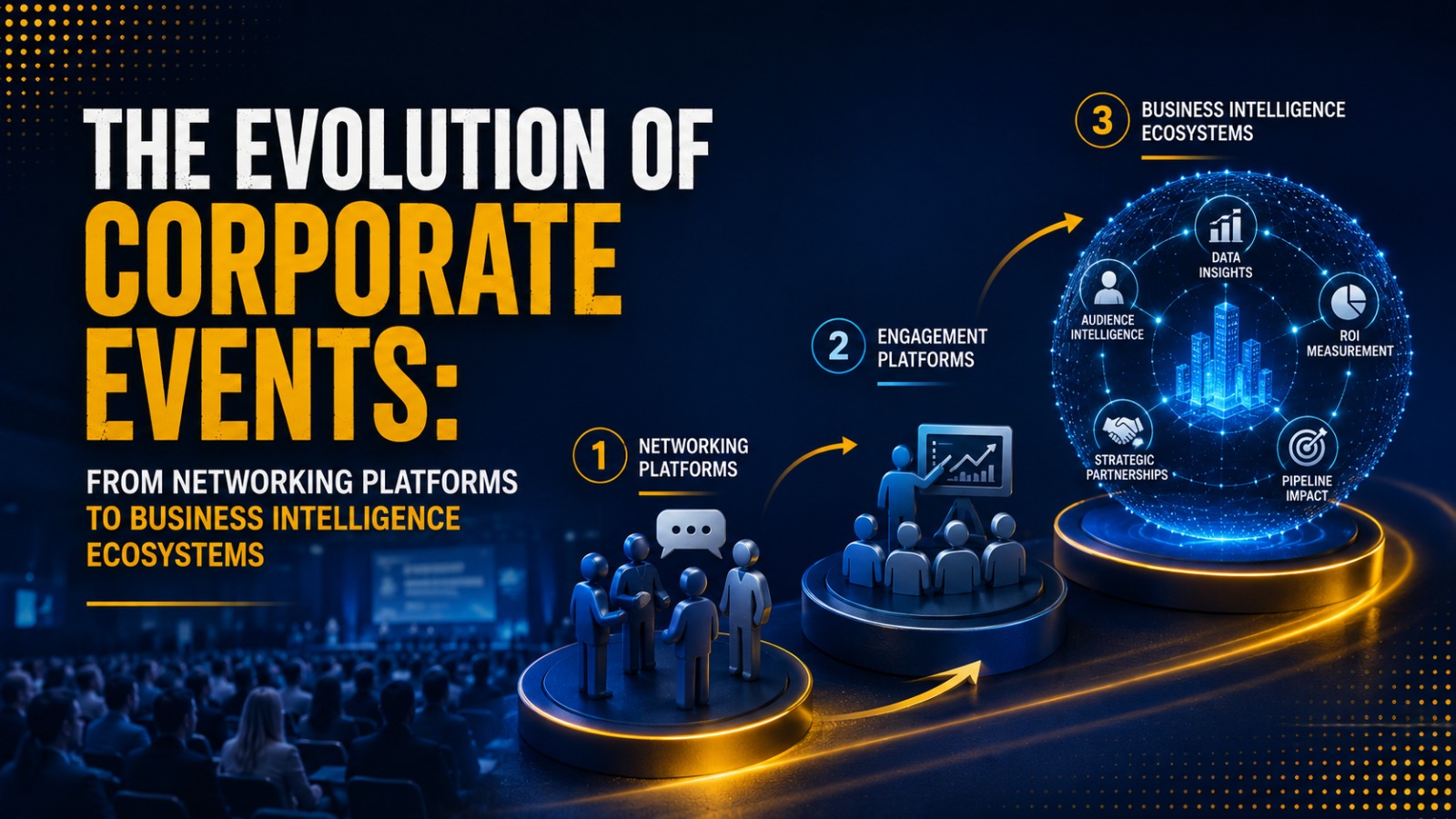
AI has the potential to change that. Imagine a system that understands what attendees are looking for, what exhibitors are offering and which conversations are most likely to create value for both sides. Instead of hoping the right people bump into each other, events can become far more intentional about creating those connections. For organisers, that creates a stronger event experience. For sponsors, it improves return on investment. For attendees, it makes the time they spend at an event far more valuable.
Across industries, marketing budgets are facing increased scrutiny. Every investment is being measured more closely than before, and events are no exception. Sponsors are no longer satisfied with knowing how many people attended. They want to know who attended, what conversations took place and what business opportunities were generated. AI can help organisers provide better insights and demonstrate value more clearly.
But none of that replaces the human side of events. It simply strengthens it. The more digital business becomes, the more valuable human interaction gets. AI can answer questions. It can provide recommendations. It can analyse data. But it cannot sit across a table and build trust. It cannot replace the confidence that comes from meeting a potential customer, partner or investor in person. And it certainly cannot replicate the relationships that often develop over years of shared conversations and experiences.
That is why predictions about the death of live events continue to miss the point. The value of events has never been the venue. It has never been the stage or information alone. The real value has always been access — access to people, access to opportunities and access to conversations that would not have happened otherwise.
As AI continues to transform how business information is created and consumed, that kind of access may become even more important. AI will make events smarter,it will make them more targeted, it will make them easier to measure. But the reason people attend will remain largely the same as it has always been.
Business still happens between people.
Tagged with :